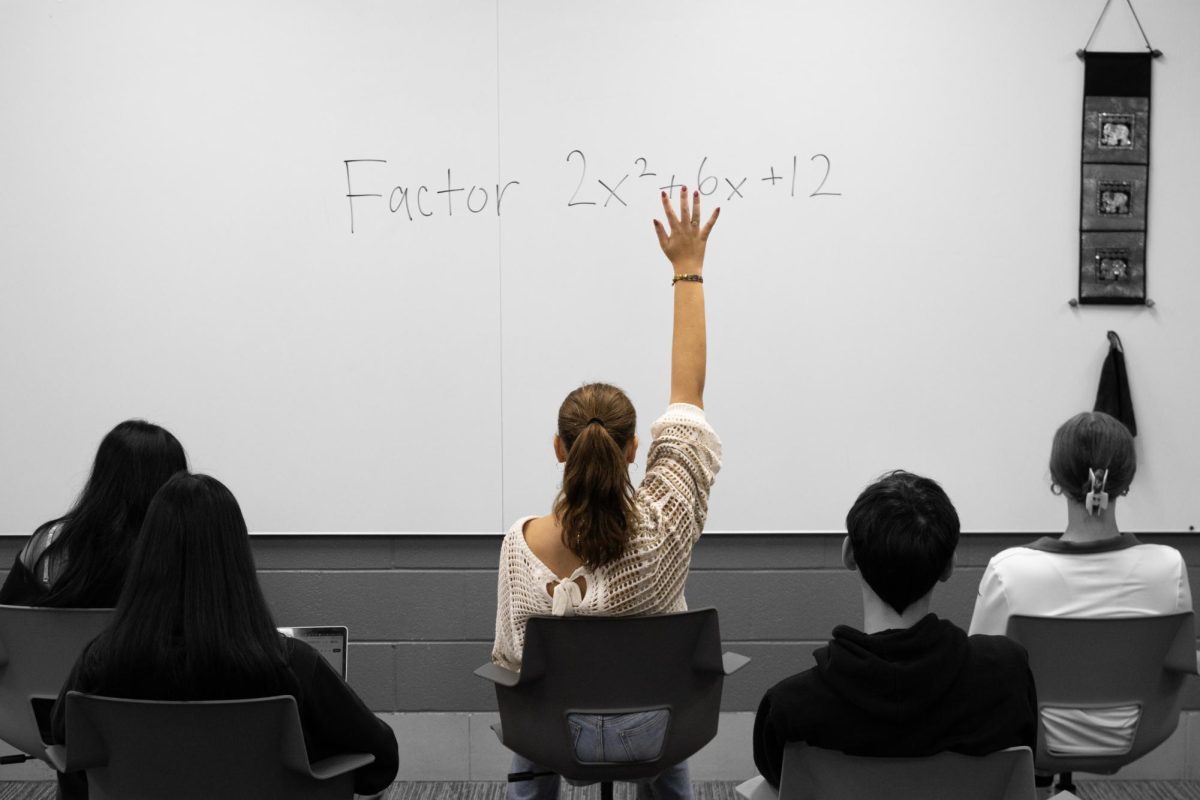

It is easy to recognize injustice. It is a lot harder to speak up against it.
Whether it is discrimination, unfair treatment by the people in power, or policies that put certain groups at a disadvantage, unfairness can exist in many forms.
While issues like racism may seem distant from the everyday experiences of some, 32 percent of high school students reported experiencing racism at school, according to“Experiences of Racism in School and Associations with Mental Health, Suicide Risk, and Substance Use Among High School Students,” a 2024 report by the Centers for Disease Control and Prevention.
For many students, oppression is not an abstract issue but rather something they encounter in their everyday lives.
Discrimination is not always confined to classrooms or hallways. During a football game between New Trier High School and Evanston Township High School at Northwestern University’s Ryan Field last month, members of Evanston’s marching band reported being targeted with racist and homophobic remarks by New Trier fans, with some students reportedly being told to ‘go back to Africa,’ the Chicago Sun-Times reported.
Incidents like these demonstrate why discrimination can not be as dismissed harmless jokes or isolated disagreements. When students are targeted for their identities, the responsibility to challenge that behavior extends beyond those directly affected.
Too often, the fear of repercussions outweighs the responsibility to stand up for what is right.
Fear of being perceived as a ‘snitch’ or a ‘tattletale’ led 61 percent of LGBTQ+ students to refrain from reporting incidents of victimization, according to the Gay, Lesbian, and Straight Education Network (GLSEN)’s 2021 National School Climate Survey. Fear of judgment, damaged friendships, rumors, or backlash from classmates can discourage students from seeking help, even when they experience harmful behavior. Challenging an authority figure or questioning an established institution can feel even more intimidating.
These concerns are understandable, and no student should have to sacrifice their safety to do what is right.
While students are not responsible for solving every issue, they do have a role in challenging the wrongdoings they witness. Administrators cannot address an incident if they do not know about it, and both harmful behaviors and prejudiced perspectives are unlikely to change when nobody challenges them. Although remaining silent may seem safer in the moment, it can leave those experiencing discrimination without support, allow unfairness to go unchallenged, and reinforce the idea that such treatment is acceptable.
As students, we deserve to feel safe in a community where we can trust that others will speak up against injustice and stand up for what is right.
Taking action does not always mean confronting someone publicly. Students can report concerns anonymously to Textforhelp, a 24/7 line available for students to talk to licensed therapists, by texting ‘GBSHELP’ to 1-844-823-5323. Students can also use Safe2HelpIL, a 24/7 program in which students can use a free app, text, or website to share information on school safety issues in a confidential environment. In addition, there is the online Titan Concern Form on the South website, where students can report concerns regarding the safety of other students.
It is our responsibility as students to stand up to wrongdoings and use our voices to make a change. Too often, when witnessing discrimination, we assume someone else will intervene. By allowing fear or the expectation that someone else will intervene to dictate our response, we are allowing these events to continue.
Seeing injustice is only the start; real change