
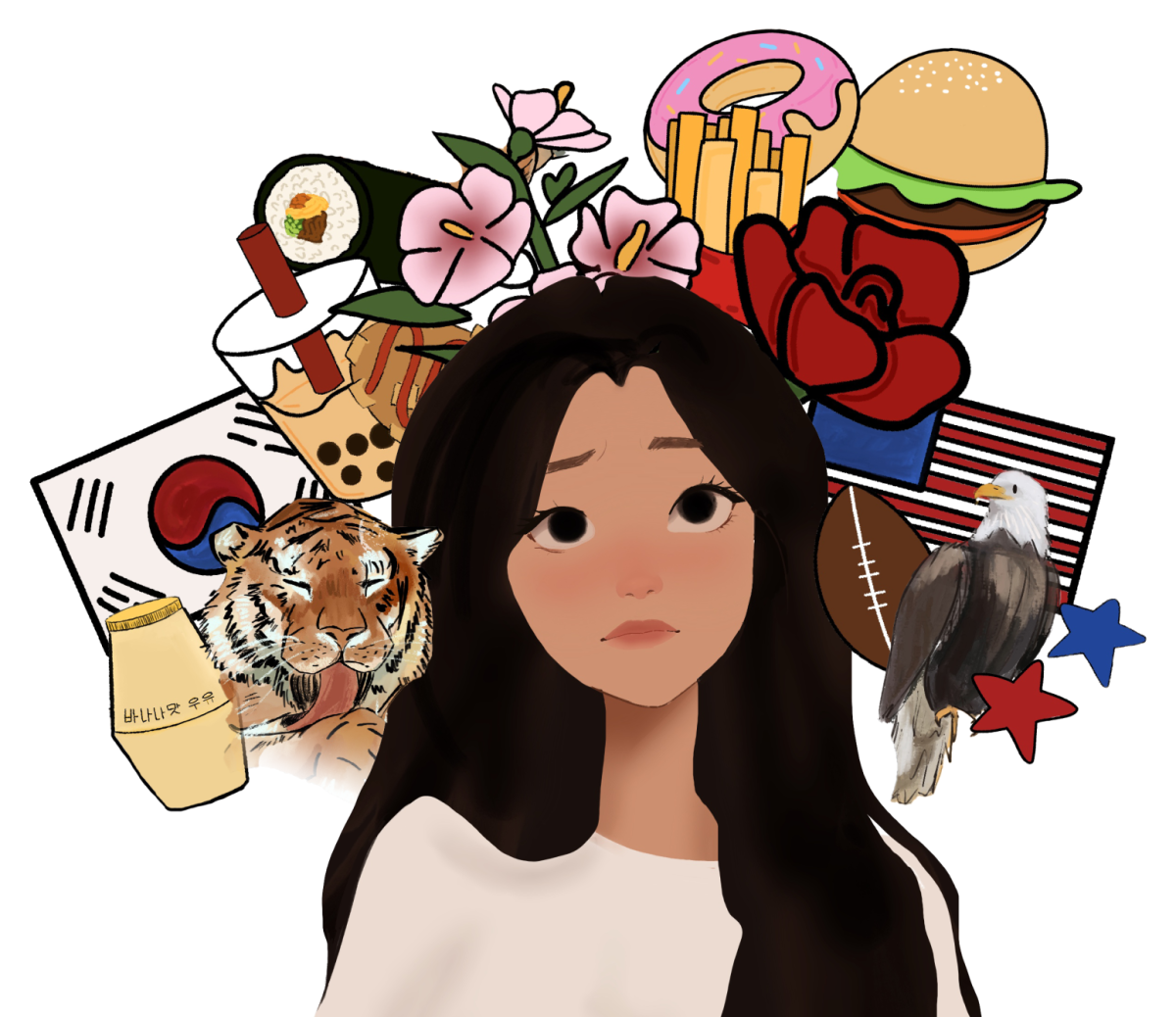
I have two names.
I introduce myself as Claire each time I meet someone new and everyone at school calls me Claire. Claire is the name I put down at the top of my papers, the name I type out on emails, write on medical forms, and sign with on letters.
Umma and appa, my mom and dad, and family back in Korea call me by a different name, Jiwon, but both names feel equally familiar and loving.
Having two names is not a new experience to me.
I have two ways to understand conversations, two ways to express my thoughts, and two ways to communicate. Everything I can say or imply is doubled between two languages.
Balancing two cultures and having two of everything can be very difficult, but it is important that you stay true to your culture and do not give up on being bilingual, and instead embrace the trials and tribulations, not avoid them.
I have always been in an awkward spot between two languages and cultures. There are some terms and phrases that are impossible to translate into either language, or different tones that make each language special. Being bilingual and growing up with balancing two cultures is like translating, it might not be perfect but you always try your best.
It feels difficult at times to balance and embrace both languages equally, especially when they are tied to cultures I practice. Like me, 36 percent of the students at South said they have struggled with balancing two cultures, according to an unscientific survey of 306 students conducted by The Oracle.
Students should try to maintain a balance between their languages and cultures to preserve their heritage. The continuous practice of language and different customs helps to create diversity throughout the world. Many communities, including ours, have lots of diversity and practice a variety of cultures, as 71 percent of students practice cultures other than American, according to The Oracle survey.
Being bilingual is beneficial and also supports people to stay connected to their own cultures and communities, as well as their families, according to “Growing Up Bilingual: Supporting Language Development in Multilingual Families” a 2026 article published by Progressive Pediatric Therapy.
I constantly take in different tones and words that are difficult to translate. Some words or proverbs do not have direct translations in either Korean or English, so I end up trying my best to explain what it means. Translating between languages can be frustrating and is for 51 percent of students at South said they have trouble translating between different languages, according to The Oracle survey.
Growing up with these two languages made me realize that the same words could have the smallest difference, but change the entire context of conversations. The disconnect between the two languages often frustrates me. It feels as if the disconnect in languages is parallel to my identities. The balance of two cultures is never perfect, similar to translation.
Despite this frustration, I continue to try and manage this imperfection as I weave it into my daily life. A lesson to take away from this tie between translation and balance is to continue practicing these languages in reminding yourself of your heritage. Translation can often be difficult, but continuous perseverance and holding onto language and traditions is the key for motivation.
Even when I have struggled to balance these two, I do not regret any part of it because all I have reaped from these two cultures is benefit and you should keep balancing them to be able to feel the same benefits.