


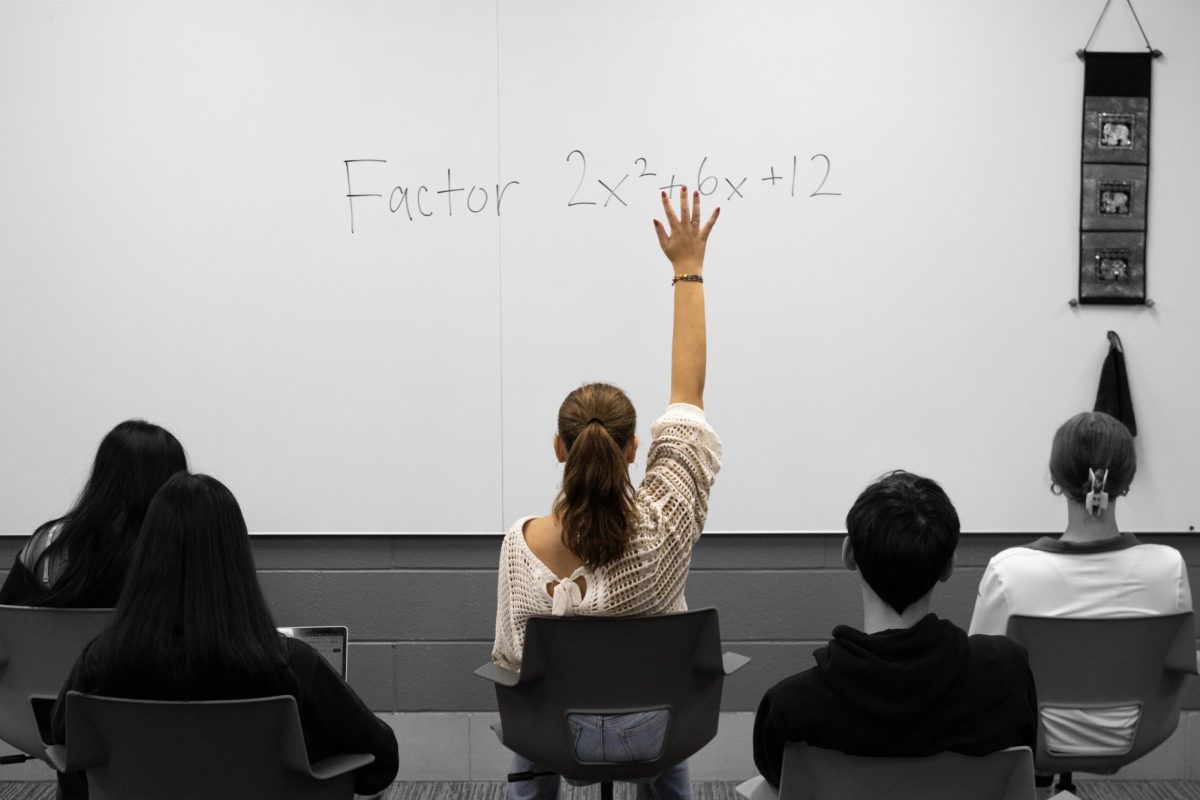
Multiple times throughout the day, the same pattern is seen across South. Teachers ask a question, pausing at the front of the classroom, waiting for an answer. Yet, not a peep can be heard as students sit still and silent, their faces expressionless. Not a single hand goes up and not a single mouth opens to speak. Many students are afraid of failure and being judged by their peers, causing them to refrain from participating in class. An overwhelming 75 percent of South students do not raise their hands in class because they are afraid of getting something wrong, according to an unscientific survey of 313 students conducted by The Oracle.
The possibility of embarrassment overwhelms students, making them dread the consequences of answering incorrectly, whether that is getting laughed at or hearing classmates make snide comments under their breath. Unless you welcome mistakes, you cannot grow in your education or as an individual, Steve Weissenstein, Career and Technical Education (CTE) Teacher, said.
In class discussions, students wait to participate until someone else does first, unwilling to risk feeling embarrassed or having their confidence shaken if their answer differs from their peers’. However, more often than not, more than one student is thinking the same thing, Math Teacher Carrie Rosen said. If a student gets a question wrong, they are probably not the only person who can learn from the mistake, Rosen added. Making mistakes allows one to better remember correct answers. Being corrected and taught the right way to do something helps students absorb and retain information, lowering the chance of getting the same question wrong again, according to KQED, a public media organization that serves the National Public Radio and Public Broadcasting Service.
While mistakes can help students learn, the pressure to participate changes when classroom discussions are graded, making it important for teachers to create an environment where students understand that getting an answer wrong is part of learning. When a discussion is graded, 80 percent of students participate, which is much more than non-graded discussions, according to The Oracle survey. While this suggests that grades can motivate students to participate, graded discussions can also add pressure. What teachers want to show students, via putting the pressure of a grade on them, is that during class discussions, participating can be a low-risk opportunity to practice expressing ideas, English Teacher Lisa Neu explained. In fact, participating can build confidence in asserting what one thinks or feels, Neu said.
Teachers work hard to ensure their classroom environment is low-pressure and facilitates participation, Neu said. They want to teach material that students are enthusiastic and willing to engage with, Weissenstein added. Teachers also work with students to find strategies that make participation feel more manageable, such as asking a question at the beginning of class or talking with a teacher privately about ways to become more comfortable speaking, Weissenstein said.
But it is a two-way street.
Students cannot always wait until participating feels completely comfortable, because learning often requires stepping outside that comfort zone. Engagement is a choice that makes class more interesting, but only reaches its full effect when students participate. Students can start with smaller steps, such as answering a question they feel confident about or contributing to a discussion with a partner. Overtime, these small steps can make speaking up less intimidating.
Another way students can step outside of their comfort zone is by asking for help. By asking for help, whether from a teacher or a peer, students can do better in the subject and get an explanation personalized to what they need to be successful. Teachers want students to seek help, but if a student is nervous, they can go to the Titan Learning Center (TLC) or ask a peer who understands the subject.
If we do not seek help or ever take the risk of raising our hands, we cannot expect to get through academic roadblocks with ease. It is vital that students take the risk of participating regardless of fearing judgement or failure.