


Freedom of the press is the sole entity that allows newspapers to run. It allows the public to read about every aspect of our world: from reviews on what restaurants to eat at to criticisms of institutions and people in power.
We often focus on professional newsrooms when we think of the free press, but it matters just as much at the student level, as high school and college newspapers are cultivating our future professional journalists. Illinois passed the New Voices law in 2016, which protects the rights of student journalists, outlawing media censorship from administrators in public high schools and colleges. The version of the law passed in Illinois fails to protect our advisers. 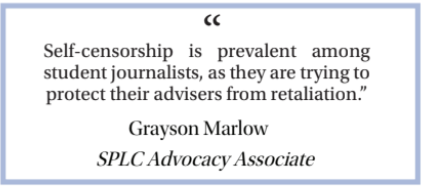
States have the choice whether to implement or reject New Voices as well as specific laws within it. States may reject this law for a variety of reasons. School administrators sometimes oppose adviser protection because they want to maintain authority over personnel decisions. Some legislators view the law as limiting admin’s ability to manage staff, but it’s still an indirect way of limiting the freedom of the press.
In the United States, 18 states currently have a New Voices Law, but five of those states, including Illinois, do not protect high school advisers from retaliation, Mike Hiestand, Student Press Law Center (SPLC) lawyer, said. This means if a school administration requests stories to be changed, removed, or not written, and an adviser denies it, the adviser risks repercussions or being fired, according to the SPLC website.
Advisers are essential to student newsrooms. They oversee the paper, help mentor students in reporting, interviewing, and writing, deal with the cost of the paper, and act as a bridge between administrators and student journalists. Numerous students in Illinois have stated that they are afraid to report truthfully, Grayson Marlow, SPLC Advocacy Associate, said. Because of the lack of adviser protections, self-censorship, the action of voluntarily suppressing opinions or words, is prevalent among student journalists, as they are trying to protect their advisers from retaliation, Marlow added.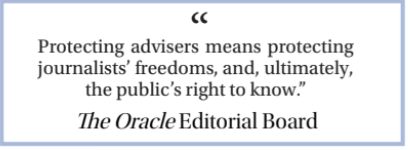
The ability to produce authentic stories on real, pressing topics is the core of journalism. As students, it is our responsibility to maintain this core value within our school and community. By writing about these laws and sharing our stories of unjust censorship, we spread awareness, and can create widespread change, achieving our goal of securing rights for our advisors.
By building an understanding of our rights, we are able to move forward in the search for sufficient change. Resources like the Illinois “Know Your Rights Guide” on the SPLC website are tools for high school journalists to learn and speak up with facts and truth as our backing. Beyond law, the only limit student journalists have in obtaining true freedom of the press is inaction.
If you are not a student journalist, a way to help advocate for adviser rights in the New Voices law can be to spread awareness and make sure people are informed about the lack of adviser protection, as this can create a broader community and support group to hopefully get adviser protection as soon as possible. Student journalists need the freedom to report without fear because they are the journalists of tomorrow.
The stories they learn to pursue today, shape the journalists who will inform the public for years to come. Protecting advisers means protecting journalists freedoms, and, ultimately, the public’s right to know.