
Walking into my first class of sophomore year, Advanced Placement European History, I knew that the workload would be heavy, including 10 to 20 pages of notes a night that had to be handwritten.
As I sat down to take notes for the first month of class, my annoyance exponentially grew because my hands never seemed to be able to write fast enough for the rate at which I was digesting the information. Despite this, it was hard to deny that my brain was processing the history and storing it effectively, because every time I had to write a definition, take a pop quiz, or have a group discussion, facts always seemed to pop into my head.
This year, AP United States History (APUSH) has proven to provide me with a similar homework schedule, but with a new caveat: notes won’t be checked, or graded. My schedule has only gotten more time consuming, so one night, I decided to take digital notes to save time. Unfortunately, I did not do as well on my quiz because the information didn’t stick. It was lost in the junk drawer of my mind.
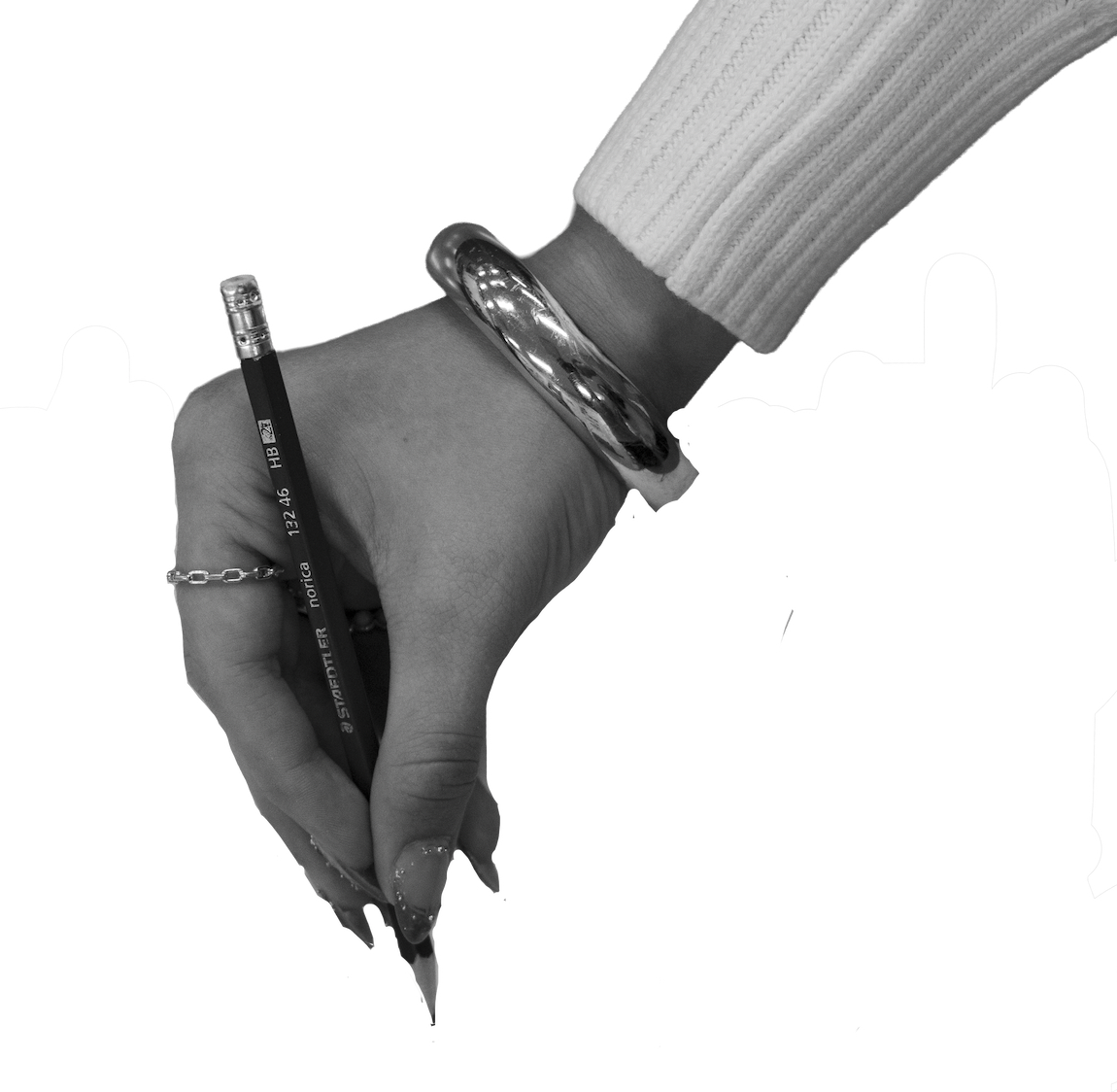
While taking the time to write everything down by hand is rather inconvenient, and can get extremely annoying in the case of APUSH notes, it is imperative we continue to develop this skill, using it as frequently as possible.
Handwriting is not only a more helpful strategy when it comes to learning and processing information, but it significantly boosts cognitive functions too. Handwriting is proven to activate more regions of the brain, including motor and sensory processing, which help actively compartmentalize the information being written, according to “The Neuroscience Behind Writing: Handwriting vs. Typing—Who Wins the Battle,” a 2025 study from the National Institute of Health (NIH). Typing information engages fewer neural circuits, which are interconnected networks of neurons that process information and carry out specific functions, leading to a more passive process of retention, as opposed to a more active process when you handwrite, according to the same NIH study.
Typing is nearly 55 percent faster when it comes to recording information, although the information is not retained as well, making it more inefficient in the long run, according to edutopia.org.
When trying to retain information, handwriting is not the only option. Doodling is also a way to absorb new information when not finding anything specific to take notes on. Just the act of putting a pen to paper and moving it around increases knowledge retention.
Doodlers recalled 29 percent more of the information they were given than those who did not, according to “What does doodling do?,” a 2009 study from Jackie Andrade.
Sitting in the back of my classes, I occasionally struggle to keep my eyes open, so I touch my pencil to paper and start doodling clouds of stars on the corner, and it actually helps me compartmentalize the information better than doing nothing.
Not everything a teacher says is worthy of taking notes on, but may help connect the dots later on when learning new material, which is why doodling can be very effective when taking notes is not necessary.
When my hand cramps up from writing for too long, or when the side of my hand becomes smudged with lead, it is hard not to look towards a computer screen for help to relieve my annoyance, but it is important for me to remember that if that is the route I go down, the information will become just another blip in my mind, sorted in the same group of forgotten appointments and random tasks.
This year, the biggest step I have to take will not be taking the ACT or looking into colleges, instead, it will be staying off of screens when recording information.