
Things that I will never forget from the summer of 2026 are not seeing Pete Crow-Armstrong hitting for the Cycle, Lollapalooza, or even my amazing trip to California. Instead, I will always remember not eating produce from grocery stores for about two weeks.
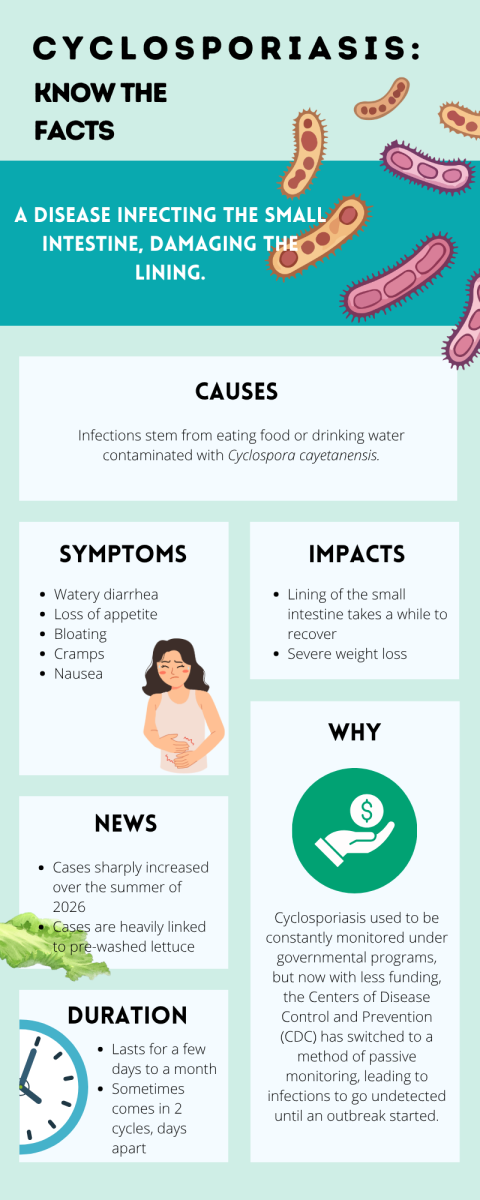
Around mid-July, news started circulating about a parasitic virus I had never heard of: cyclosporiasis, a disease infecting the gut. Symptoms include severe fatigue and explosive diarrhea, according to the Centers for Disease Control and Prevention (CDC). People around me started to urge me not to eat lettuce, fresh berries, or herbs because they were the most likely suspects to harbor the virus.
Spread through fecal contamination in water or soil, the disease quickly made its way across the United States. The contaminated water infected fresh produce that was then sent and sold at grocery stores, infecting an unusually large number of people this summer. Cases jumped from nearly 1,200 last summer to 15,700 this year, according to the CDC.
After learning about the function of public health programs at Tulane University for a week, I was utterly confused as to how a detrimental virus, such as cyclosporiasis, had gone under-monitored. It turned out to be that it was being monitored using passive surveillance, instead of active surveillance, like it previously was before budget cuts.
FoodNet, a public health program, received budget cuts from the Trump administration, which partly caused this massive outbreak, according to npr.org. FoodNet serves to monitor foodborne illnesses, constantly to try and reduce outbreaks, but after the Trump administration reduced funding to the CDC by $5.8 million last year, or roughly 40 percent, local and state public health programs could not function the same way they used to, according to npr.org. Efforts now rest on controlling the spread and recalling food infected with Salmonella and E. Coli, while actively monitoring illnesses like Listeria, Vibrio, and Cyclosporiasis is limited or optional, according to NBC News.
While monitoring Salmonella and E. Coli is extremely important, by ignoring other viruses, so many around the country are put at risk. This summer at Tulane, I worked on projects to emphasize the impact of certain infectious diseases that fly under the radar, but are extremely dangerous, though with the lack of monitoring, our government almost disregards their prominence, just to place money elsewhere.
Our government does not have to be responsible for our individual situations, but they should be conscientious about health issues that do not just affect one person, but thousands of people across the country. Continuing to scale back funding on public health programs that keep this country safe weakens us. Instead, our government should allocate more funds to the CDC and the Food and Drug Administration (FDA) to ensure the health of thousands of citizens, while lessening unnecessary expenditures, like White House renovations and over-purchasing software.
By using preventative measures, like active surveillance from FoodNet, we can stay healthy, and hopefully not infected with gut wrenching diarrhea. Cutting budgets for programs that protect us actively puts our health at risk.