
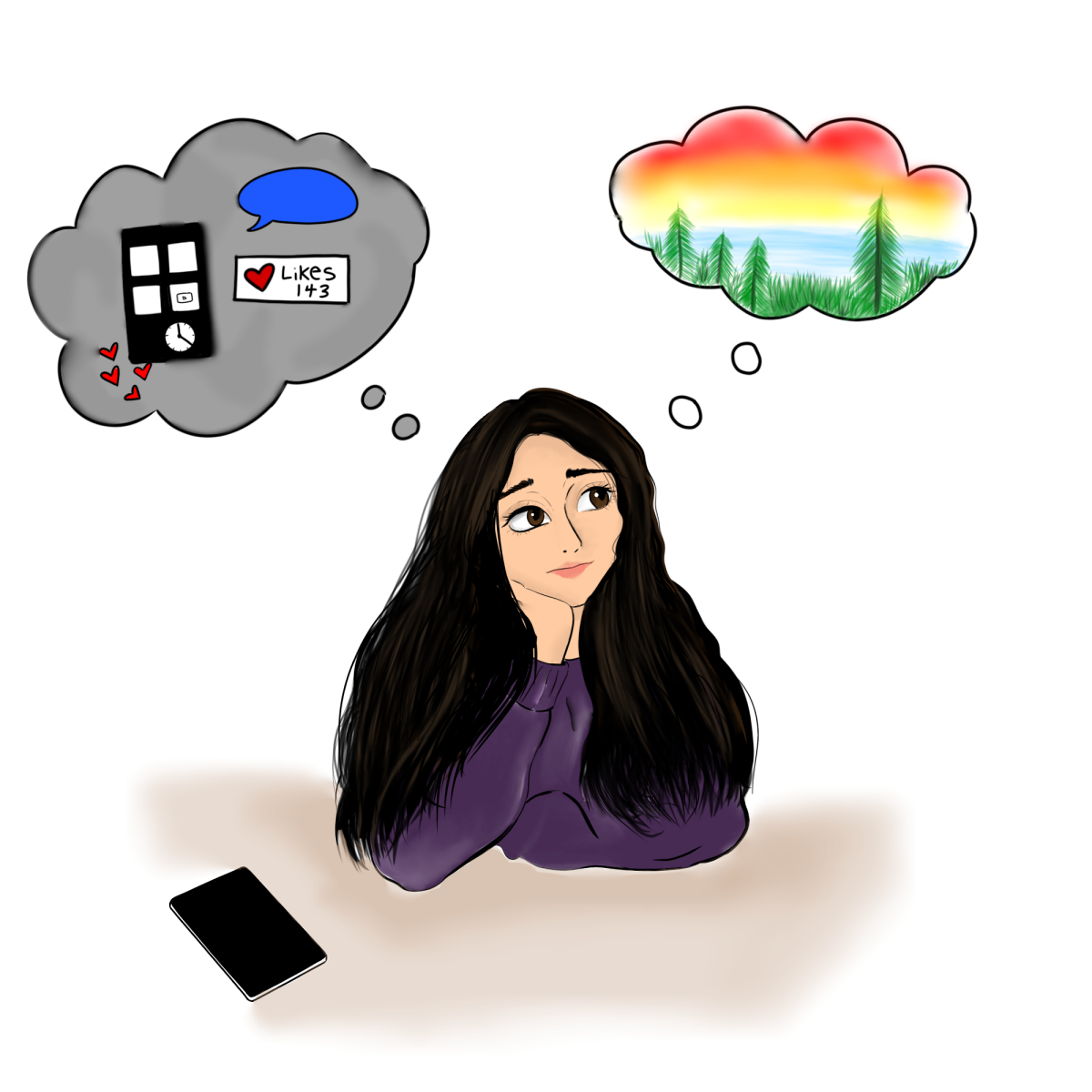
Within seconds of putting the finishing touches on an essay, I shut my chromebook and pick up my phone, starting to scroll mindlessly on social media. Lifestyle, how-to, and get ready with me videos flood my For You page and fill my mind, all of which will be forgotten in less than a few minutes.
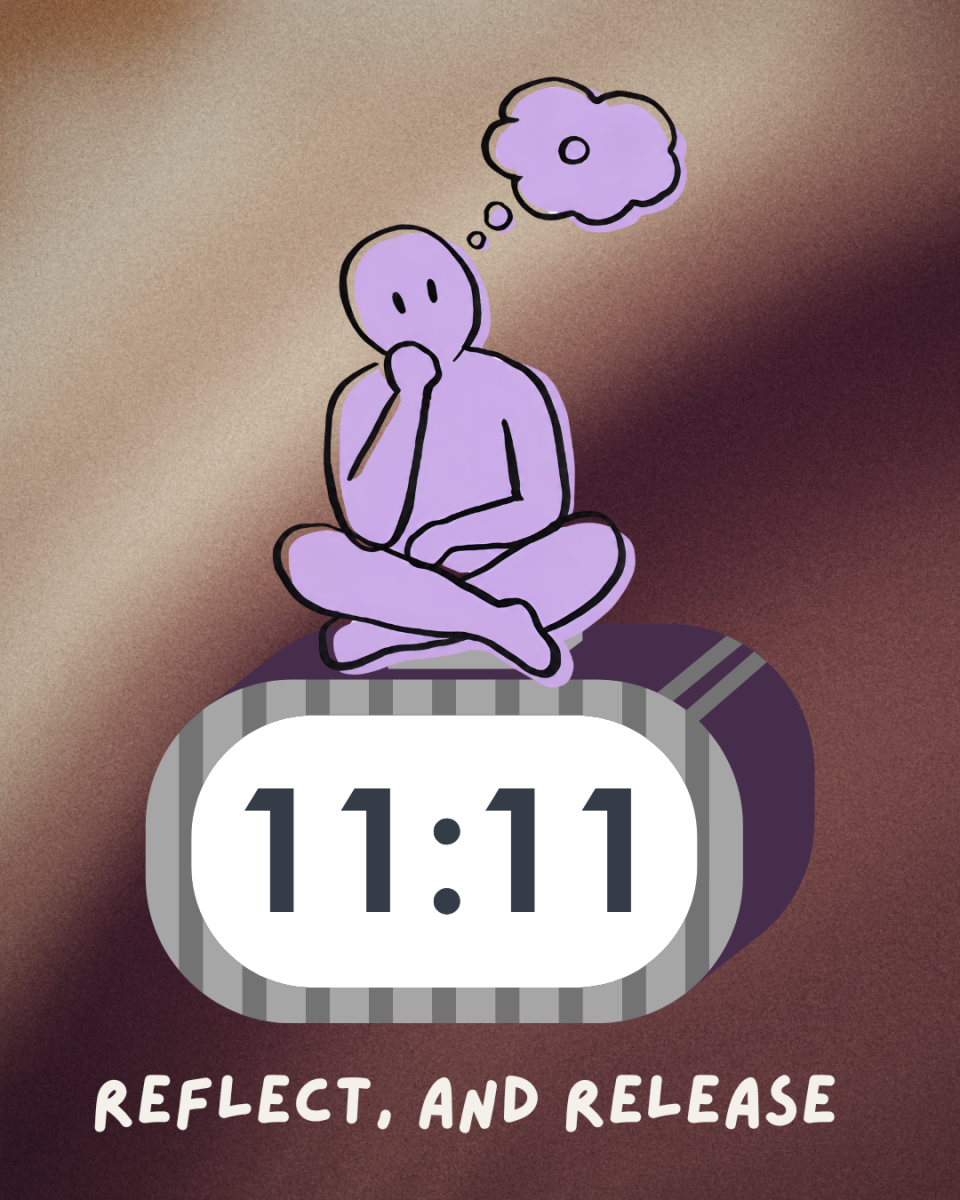
With this constant cognitive overload, there is no true time to just sit and think, even though it is essential for our well-being. Letting our brains rest without distractions should not be overlooked. We need to bring back being bored.
Electronics often dominate people’s lives as we use them to contact others and get information. Our phones have become less of something to communicate with and more of a routine, with scrolling at a specific time to soothe anxiety with exciting and personalized short videos, whether that is during breaks or before or after school, according to “Constant Companion: A Week in the Life of a Young Person’s Smartphone Use” a September 2023 study published by Common Sense Media.
This constant need for our cell phone fills times allotted for breaks and relaxation. The average American spends over five hours on their phone a day in total, according to “Cell Phone Usage–How Much is Too Much” a July 2023 study from the University of Rochester.
After our brain is focused on intense activity, such as homework, studying, or taking a test, it returns to a default or resting state. When in this resting state, your memories are consolidated and your brain plays through scenarios, learning lessons for the future, according to “Boost Your Brain With Boredom” a Sept. 2022 article by Mayo Clinic.
Yet, the majority of us replace the importance of this time by picking up our phones and opening social media.
This restorative state is essential for our brain and memory. It should not be replaced by aimless scrolling, even though many people find being bored unappealing.
When left in a room for up to 15 minutes with nothing to do, participants did not enjoy their time being bored, expressing great dislike towards the situation, according to “Just Think: The Challenges of the Disengaged Mind” a July 2014 study by science.org.
When having nothing to do, even for short periods of time, I often feel the need to play music, put a TV show on, or start scrolling on my phone. Just the thought of being bored feels uneasy.
Being bored may feel dull and uncomfortable at first. Some ways to overcome your boredom and make it feel less lifeless, while still letting your brain think and not occupying it can be to go for a walk, journal, or to draw.
I like to go for walks after hard tasks, allowing my brain to be able to switch off and just think about anything and everything, even if it is just for a little bit.
If you find your mind starting to wander, be more creative, and play through conversations, events, or specific moments from your day, that is because your brain is in a resting state and is starting to process information more efficiently, all a byproduct of being bored.
Boredom is needed for our brains to function properly, recover from long periods of time where we are focused, and be more creative. Our brains are the key to our survival, and we need to treat them like they are.