
Water has symbolic meaning in literature, often representing purity, cleansing, and redemption. In the fall play, Eurydice, water represents memory, forgetfulness, and loss, Mandi Corrao, Drama Teacher and Fall Play Director, said.
Eurydice is a Greek myth that highlights Eurydice’s travels through the Underworld after her death as her husband, Orpheus, comes to save her, Corrao said. The classic play follows Orpheus’ journey, but this version, produced by Sarah Ruhl in 2003, focuses on Eurydice’s experience in the Underworld and self-discovery of her identity, Corrao explained.
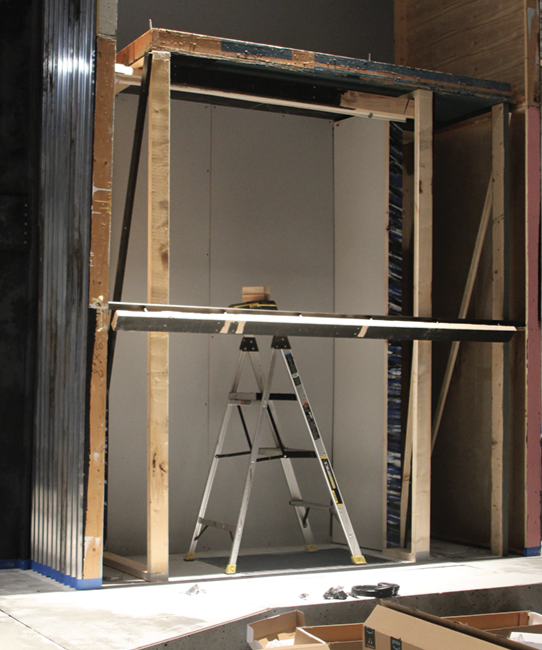
Water also has a significant physical role in the play, Corrao said. To create a play with a water feature, a set will be built that includes a rain elevator– an elevator door that, when opened, reveals rain inside the doorway. Eurydice will be holding an umbrella inside the elevator so that she does not get wet, symbolizing Eurydice wanting to hold onto her past self before she dies, Corrao said.
“We are using rain because it represents the wiping away of who she was before she died,” Corrao said. “We’re using actual running water to get that effect. Eurydice will come down in this elevator, and then it will rain inside of the elevator.”
The water elevator was designed using pipes with holes that spray the water, Auditorium Manager Rich Winship said. A grate on the elevator floor will catch the water, sending it into a tank below stage, he explained.
“Years ago, I did Singing In the Rain and we developed PVC pipes with holes in them that aim up, “ Winship said. “I’ve saved all that stuff from what I did and I’m going to use that same concept.”
When Eurydice has moments of either remembrance or loss, the water is incorporated, senior Sophia Shevitz, playing the role of Eurydice, said. Not only is the water an important part of the play this year, but the seating will also be located on stage, providing the audience a more intimate feel, Shevitz said. The audience will get a close view of the 13-member cast during each performance and feel more connected to the story, Shevitz added.
“When the audience is on stage, you see people looking at you and it adds more pressure,” Shevitz said. “It makes it feel more like a performance and the audience loves being closer because they get to really see everything that’s going on.”
Making this adjustment allows the audience to get a more close-up experience, but it also creates struggles with seat capacity and proper lighting, Corrao said. Having such an important prop like the water elevator means that the crew must manage logistics to make everything function properly, Corrao said.
“Even if you’re not familiar with the story or if it’s something different, take a risk,” Corrao said. “Come see something that you will 100 percent enjoy no matter what.”