
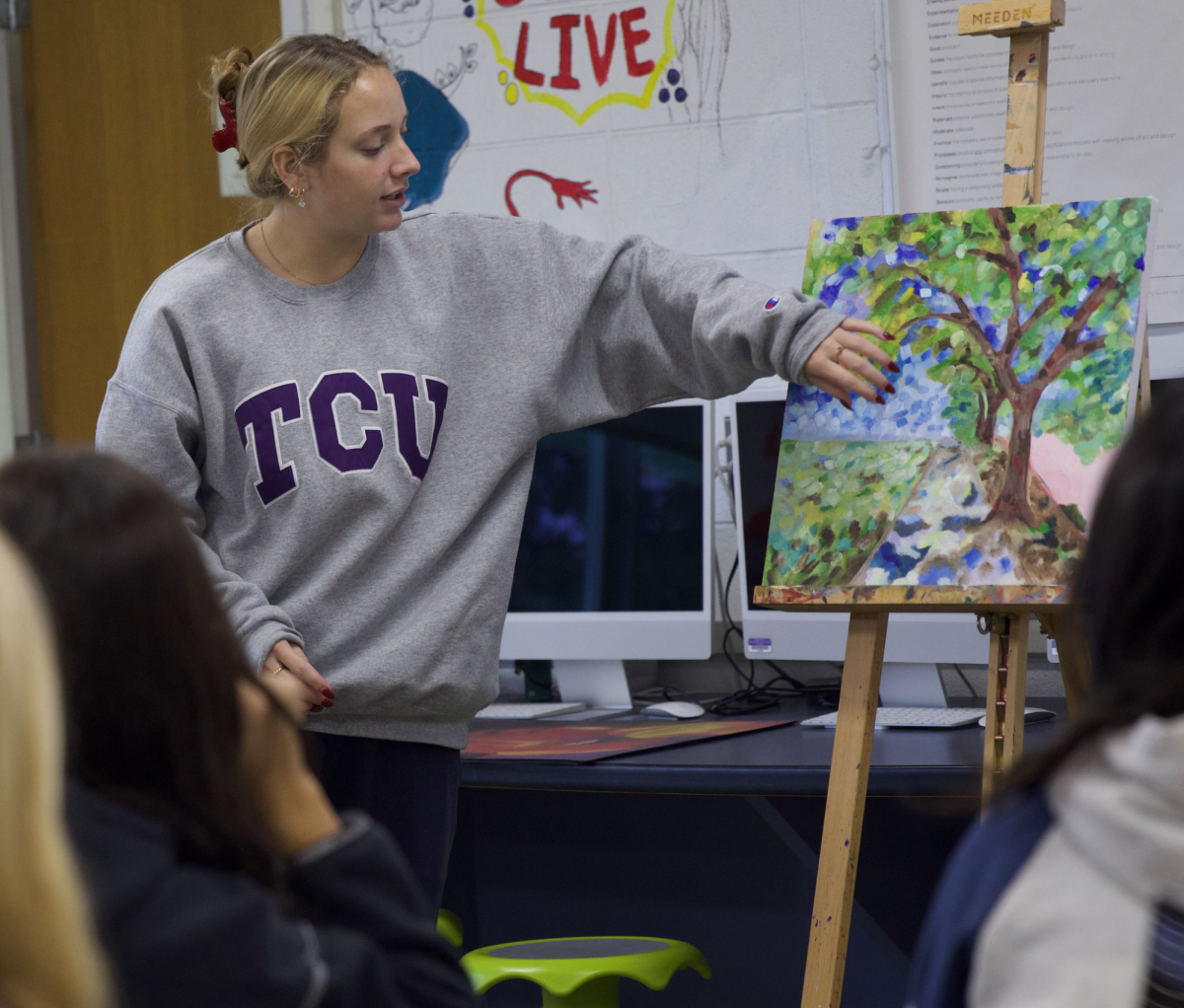
Behind beautiful pieces of art is a process that often goes unnoticed. The memories, experimentation, and countless hours that go into creating the finished paintings are rarely seen, senior Gray Jerva said.
Seniors in AP Art spend the year on a 15-piece portfolio built around one theme picked by each individual student, which the class calls a Sustained Investigation, Stephanie Fuja, AP Art Teacher, said. Before making any pieces, the students dwell on the themes they would like their piece to revolve around, Fuja said.
“They do 15 pieces that are meant to fall under the theme, an idea that they come up with, and answer an essential question,” Fuja said.
Jerva began her AP Art Sustained Investigation exploring childhood experiences and human development. Choosing mediums became part of Jerva’s creative process. She initially worked with oil paint, but found it difficult and limiting due to the slow drying and the limited space she had at home, Jerva said.
Jerva then switched materials to manage it easier, such as alcohol markers, colored pencils, and pens, she said. Although change required her to redo her pieces, she found the new materials better suited her process and themes in her portfolio.
“I’ve been drawing like with markers since I was a little kid,” Jerva said. “I think it matches my piece more because my piece is about childhood.”
Senior Maggie Scheftner’s AP Art portfolio consists of paintings of foods she enjoys and remembers from childhood, using them to represent personal memories and family connections, she said.
“My grandfather was practically mute, and his love language was food,” Scheftner said. “I thought it would be a cool idea to continue the family tradition of honoring food.”
Scheftner begins her art process by sketching ideas, then painting with oil paint. She records new ideas in her notes app and experiments with expressive brushstrokes and colors, Scheftner said.
“I love going big with my paintings, and I love having really expressive brush strokes and colors,” Scheftner said. “But at the same time, managing that with the time constraints can be a hassle.”
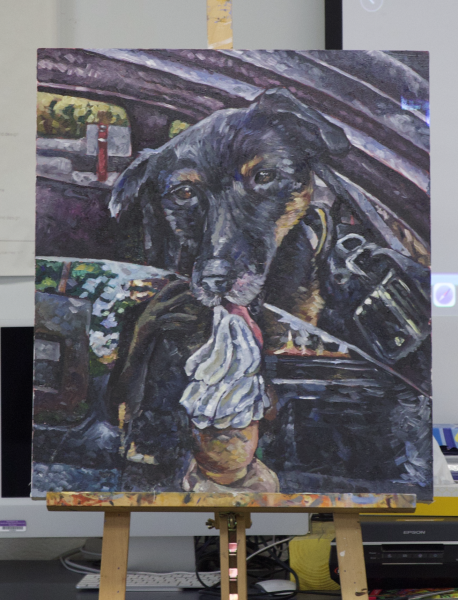
Students sometimes revise original ideas as they develop portfolios, making adjustments based on their progress and creative direction, Fuja said. Although students encounter challenges along the way, they remain open to feedback and willing to make changes to improve their work, she shared. Through weekly teacher and partner check-ins, theres great assistance to work through any challenges, Fuja said.
“My goal is to guide students more in a direction where they create the best work possible, and do things that they’re really proud of,” Fuja said.
The students’ experiences reflect the evolving nature of creation of art. Choosing materials, revising ideas, and working through limitations are part of developing a finished art piece, Jerva said.
“It’s my own experiences,” Jerva said. “If something feels weird to me, I’ll make art about it because it inspires me to share my feelings about that thing.”