
Academic stress, peer pressure, and minimal social skills contribute to mental health issues that can affect students, but the South Student Services Department works to provide mental health services to help students feel comfortable and supported.
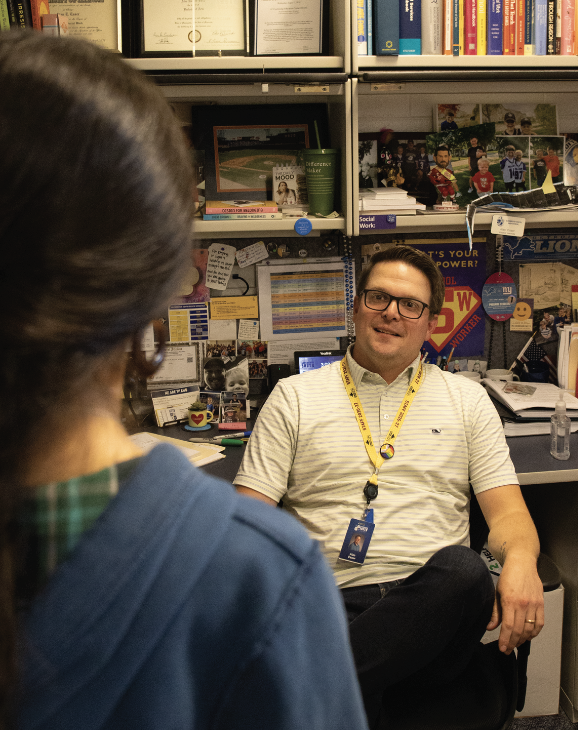
Society struggles with mental health disorders such as anxiety, depression and minimal social skills. Rooted in academic stress and social media due to peer pressure, insecurity and cyberbullying, 1 in 3 high school students admit showing signs of mental health issues, according to an article published on huntingtonpsych.com on Oct. 18. Social Worker Alan Esser has worked with teenagers in high schools for 18 years and noticed that although depression and anxiety are very common, social skills are a prevalent issue amongst young teens, potentially due to the isolation during COVID-19 pandemic, Esser said. South’s mental health staff work to provide necessary resources for those who struggle with these problems, Esser added.
“We’re trying to develop groups for kids at different levels of what they need,” Esser said. “Where we are, there are so many different organizations in the community that offer social skills groups for students.”
Resources include crisis hotlines, anonymous reporting of concerns for South students such as TextForHelp and Safe2HelpIL, and accessible community resources such as Compass Health Center and North Shore Behavioral Health, Esser said. All these resources can be found on the South website, Esser added.
“We are looking at removing barriers for students,” Esser said. “For the Health Center, it was removing that difficulty of getting to the doctor. Mental health needs are getting bigger and the more avenues to support, the better.”
All students are assigned a Student Support Team which includes a counselor, dean, psychologist and social worker. Each student’s team is where they get the help and support they need on the day to day, Rebecca Holst, Assistant Principal of Student Services, said. The team assists kids year round and is a very accessible resource, even during the summer, Esser added.
A large part of the job is building relationships with students so they know there is an adult at school they can come to when they need help, School Psychologist Christy Lambropoulos said.
“My role is really about supporting students socially, emotionally, academically, and helping them navigate the challenges that come with being a teenager,” Lambropoulos said. “Ultimately, the goal is to look beyond grades and academics and understand the whole student.”
All the counselors deans, psychologists, and social workers are passionate about helping students and work tirelessly to help find the right resources for each student in need as quickly as they can, Holst stated.
“I adore the people I work with,” Holst said. “I’m super lucky that’s the team I get to lead.”