

As students look forward to holiday festivities and long weekends throughout the school year, it is clear how school calendars shape which traditions are recognized and which ones are overlooked.
While some holidays are built into the academic schedule, others pass quietly, even when they hold cultural significance for a lot of students.
As select holidays are consistently acknowledged through days off or lighter workloads, and others are not, it sends a message about which holidays are prioritized by the school. Although this imbalance is not always intentional, it affects high school students more than people may realize. For students whose celebrations do not align with the school calendar, it can mean having to balance important cultural observances with academic responsibilities.
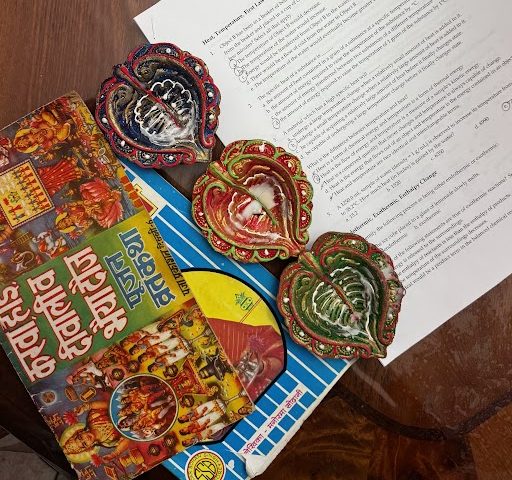
For me, this struggle is most apparent in the fall during Diwali, the Hindu festival of lights. Hinduism includes many festivals–Holi, Navratiri, Raksha Bandhan, and others–but Diwali stands out as the most widely-celebrated and spiritually significant. For South Asian students and those part of the Hindu communities, Diwali is a holiday that symbolizes renewal, joy, and victory of light over darkness. In my family, we decorate our house and light lamps to celebrate the victory of light over darkness. But every year, that excitement comes with a familiar challenge–Diwali almost always falls on a school day. While Diwali has been listed under South’s Homework Free Zone, that recognition often feels nominal. Teachers widely vary in how they respond–some kindly hold off on major assignments, while others remain unaware or unable to change their schedules. Given Diwali’s importance, it deserves to be recognized by schools with at least a day off.
I have had nights where I tried both helping with celebration preparation and studying for an exam the next morning. The entire celebration, meant to bring peace and renewal, turns into juggling culture and academics.
Most schools across Chicago suburbs use calendars that align with holidays like Christmas and Easter. Those breaks make sense with what we have been doing, but they unintentionally leave out families who celebrate differently.
According to Illinois Department of Education data, South Asian students make up an increasing portion of many suburban high schools’ populations; at South, it is approximately 24 percent. When Diwali–or holidays like Lunar New Year or Rosh Hashanah–pass with little acknowledgement, it feels like people who celebrate them do not fit into the school year. Missing school on these days often results in playing catch up on missed homework, worrying about falling behind, and having to choose between two important parts of your life.
At South, there has been a small effort to improve these situations. For example, the school includes Diwali in its Homework Free Zone announcements, encouraging teachers to make accommodations for students who celebrate. Students can let their teachers know about their religious observance to arrange support and avoid major assignments, according to an email sent to families by Principal Dr. Barbara Georges. It is a thoughtful policy and aligns with the school’s goal of belonging, but in practice, it’s inconsistently applied. Teachers are not always reminded as the day approaches, and there is not a unified sense of flexibility or celebration among faculty or students.
Beyond that, acknowledgment of these holidays is usually minimal. In the case of Diwali, the South Asian Student Association (SASA) club typically posts about it on Instagram, which can be meaningful, but without wider school involvement, it becomes more of an extracurricular initiative than a shared effort. Having posters in the hallway or an announcement for more significant cultural celebrations like the ones listed earlier would show a greater commitment to visibility and respect beyond school policy statements.
Some high schools have started taking small steps toward broader cultural awareness. Evanston Township High School, for example, uses a cultural calendar to flag major religious holidays.
If diversity is to be prioritized at our school, people’s cultural celebrations should earn more visible recognition. Designating holidays like Diwali as an official day off would show respect and inclusion.
Recognizing all religious holidays would not only benefit students of many cultural and faith backgrounds; it would teach empathy and awareness to everyone else.
This starts with better communication and a shared calendar that reflects all cultures. Over time, that change could help schools see every student’s traditions as part of the school, and not something that happens behind the scenes.