Chants echoed through the streets as Chicago and suburban high school students came together recently in a protest against Immigration and Customs Enforcement (ICE), according to abc7chicago.com. This Chicagoan activism is not an isolated instance, instead, it is in solidarity of the countless other students who have also taken a stand. Along with students from Illinois, students from over 36 states have hosted walk outs against ICE in the past month, The New York Times reported.
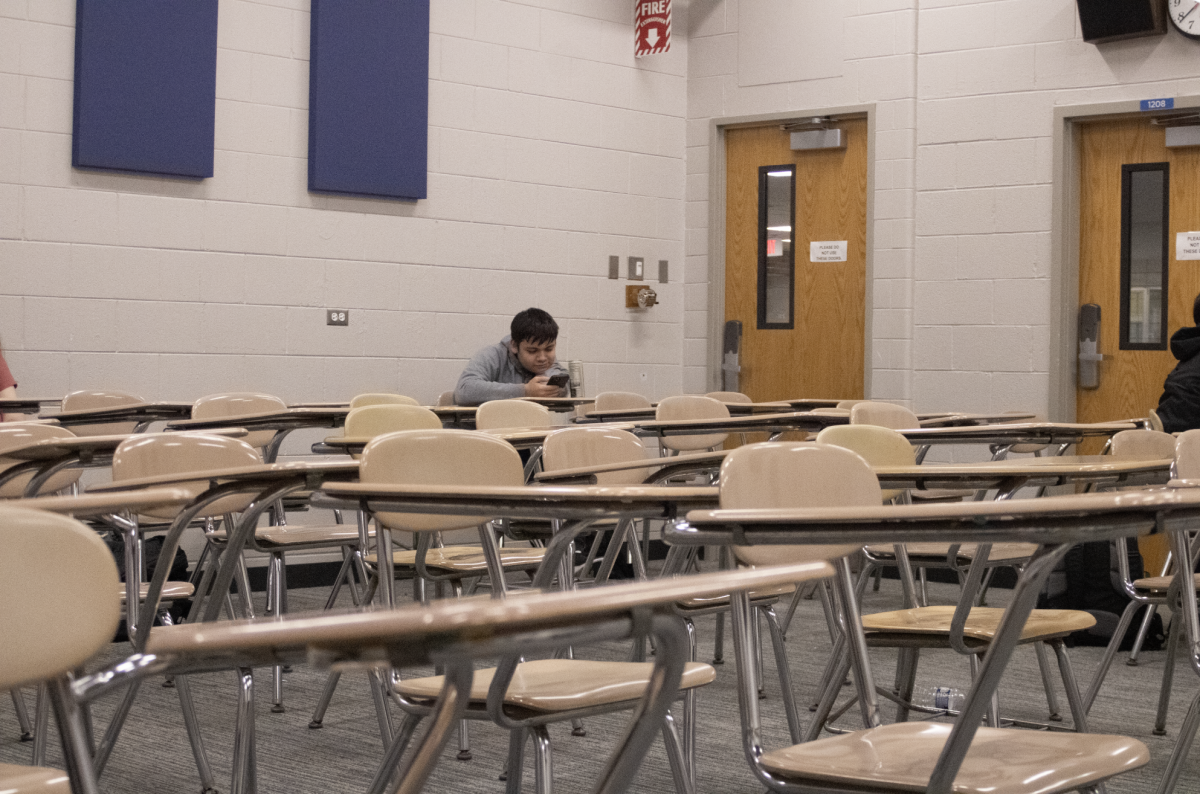
With this surge in youth-led activism, it is evident now more than ever that teenagers not only have the power to stand up for what they believe in, they have the motivation. At South, however, many teenagers remain on the sidelines when it comes to acting on their political beliefs. Even though 77 percent of South students said they feel strongly about politics on a local and global scale, 60 percent said they have not taken political action, according to an unscientific survey of 315 students conducted by The Oracle.
When politics dominate our conversations but fail to inspire action, meaningful change becomes impossible. Opinions deserve to be heard, but without action behind them, they simply remain empty statements.
If we want to see change, taking political action is necessary – there are more opportunities than you think.
Political engagement does not require national platforms or massive demonstrations;
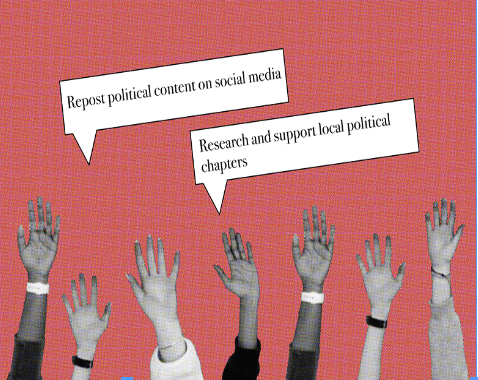
Discussing politics with family and friends may be a healthy way to comprehend the views of those around you. Social media can be another tool for action.
Just by clicking a few buttons, teens can repost content that resonates with them and their beliefs. We can even take it a step further by creating our own content that expresses our ideas.
However, the strongest changes come through action. Students can volunteer for local political campaigns or organizations in order to strengthen local democracy, according to the Center for Information & Research on Civic Learning and Engagement. Students can also serve as election judges, and training courses are offered to be eligible to work polls on election day, according to cookcountyil.gov.
Students can also influence politics by engaging in local government, like writing letters to local officials, or attending school board meetings if you do not like school policies.
After a pause by the SAO on recognizing new clubs at South, students demanded change. In September, the District 225 Board of Education approved a new process for approving clubs at South. Shortly thereafter, several new clubs were created, including Club America, South’s chapter of a national organization sponsored by Turning Point USA.
Clubs and organizations like Club America create spaces for political dialogue giving students the opportunity to understand opinions different from their own. Taking political action is essential for comprehending current events going on around us, and spreading your opinions allows you to be the change you want to see.
If you are frustrated by people’s ignorance, be a source of information. If you are upset with a school board policy, write that letter and change it. If you are moved by something you see online and wish to spread that message, repost it.
Ultimately, to see a difference on any scale, we must intentionally make an effort to spur change.