
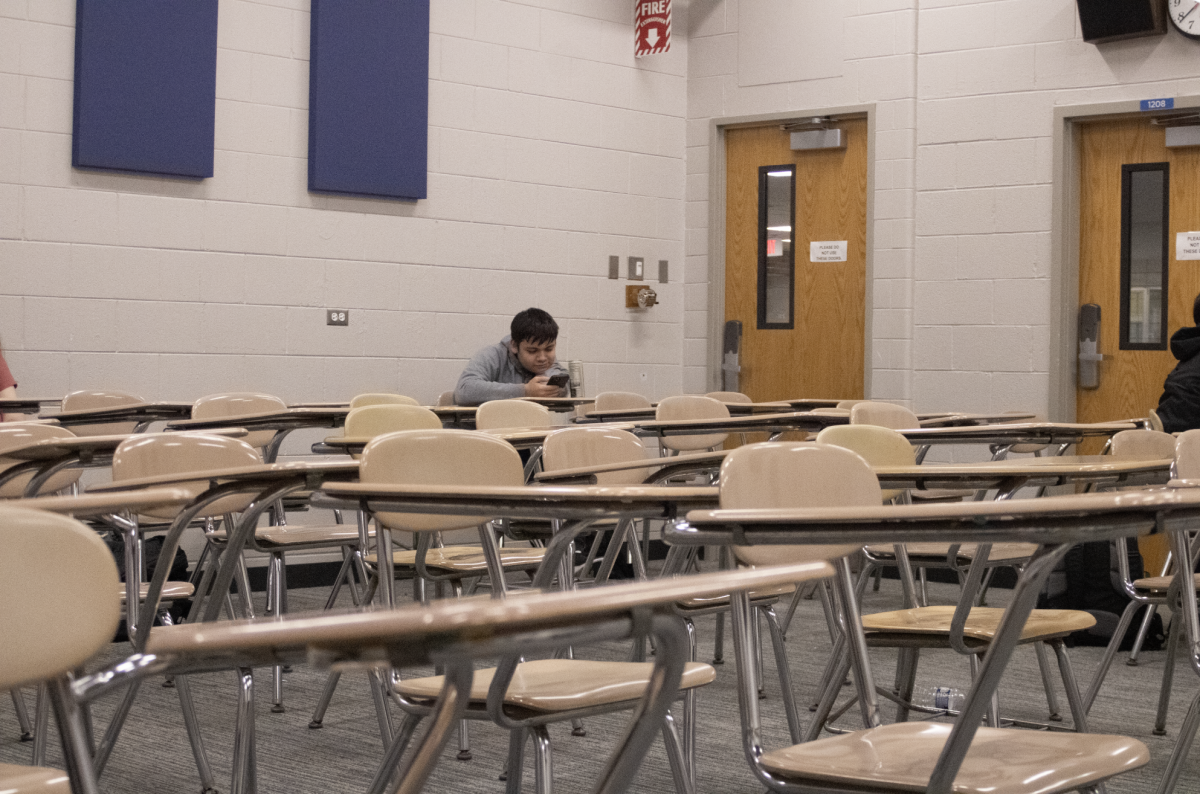
Sitting at the faux wooden tables, your eyes strain at the fluorescent lights beaming into your irises. You mindlessly space out as your teacher lectures to a hollow classroom. For many, a headache bleeds into a stabbing migraine which distracts from any attempted learning. Our classroom environments are the silent factor that determines our focus during class, for better or for worse.
Right now, for most, our classrooms are a distraction. But not for the reason you think.
Students’ academic performance relies not only on their teachers and self-motivation, but also on their school environment. Currently, many of our classrooms have harsh lights and lack of decorations, which depletes our moods and readiness to learn. Simple changes in the interior of our school can create a setting more beneficial for students, according to evidence-based educational website Edutopia.
The district should create a budget for classroom decoration which would encourage teachers to expend more effort in crafting thoughtful teaching environments.
As a part of the Master Facilities Plan, a ten-year plan of updates to our district buildings, South has implemented energy efficient LED lighting into our classrooms, according to Casey Wright, Associate Principal of Operations and Student Experiences. Sometimes the lights can be overwhelming for students, especially students with sensory issues, so student performance can be enhanced by placing screens over the lights or dimming the lights, Wright said.
Softer lighting can change the effort a student puts into their work, attention rates, and productivity, Edutopia stated. Research studies have found that reading skills can increase by 38 percent for pupils working under variable lighting conditions, compared with only 18 percent for those under normal white light, according to Phys.org. By simply adjusting the brightness of lights and investing in coverings to defuse the harshness, the classroom environment can be more conducive.
Additionally, making these adjustments is important not just for the general student population, but also for students with disabilities and sensory issues. Fixing the lighting would help make our school more inclusive, which is one of the main Titan Values of our school.
The impact of school design runs deeper than lights, extending to the design of classrooms and hallways. Exposure to nature, like a room decorated with plants or windows allowing for natural light, can change social behavior, creating a more productive atmosphere, and give classrooms a more comfortable feeling, according to Edutopia.
Currently, Instructional Supervisors can gather requests from teachers for all classroom supplies and materials including classroom decorations, Wright said. However, in reality, most teachers spend their own money towards decorating their classroom with personalizations.
The District should encourage teachers to decorate their classrooms in order to make them inviting and comfortable places for students to learn. Some teachers have already taken steps to personalize their rooms, making the class more engaging and special with posters, quotes, and decorative features. Having this around the whole building will benefit students’ ability to learn. Teachers should put effort into making classrooms more inviting and enjoyable to learn in with the admins permissions
South espouses the importance of student well-being and growth, according to the official Glenbrook South website. In order to accommodate students and allow them to comfortably learn, the work starts in rebooting the classroom environment.