A couple weeks ago, my friend casually mentioned that her father had died. Not that morning, or the night before, but nearly two weeks later after he had passed. She later told me that she had not told anyone because she did not want to be an “inconvenience.” She did not want to have to deal with the performative shifts in tone or the unspoken pressure to prove she was “handling it well.”
That hesitation says more about our culture than it does about her.
In our current culture, we like to think of ourselves as empathetic. We use heart emojis, “thinking of you” texts, and know bereavement leave policies. But our actual behavior suggests a deeper discomfort and intolerance to the mess of emotions that grief brings with? We are willing to offer condolences only as long as grief does not interrupt the schedule, and more importantly?our own comfort. We often talk about grief as a process, implying a straight path with a finish line.
In reality, grief is more like glitter.
When the initial pop happens, it gets everywhere. It is loud, it is obvious, and it is overwhelming. Our first instinct is to just sweep it all up. We want the floor clean, the mess tucked back away into neat little boxes. We want the person back to their “normal” self.
But you can never truly sweep up all the glitter. You think you have finally cleared the room, and then months later, you look down and see a single, shimmering speck on your sleeve. A song plays, a certain scent wafts by, or a Tuesday afternoon just feels a little too quiet, and suddenly, you are hit with the weight of it all over again.
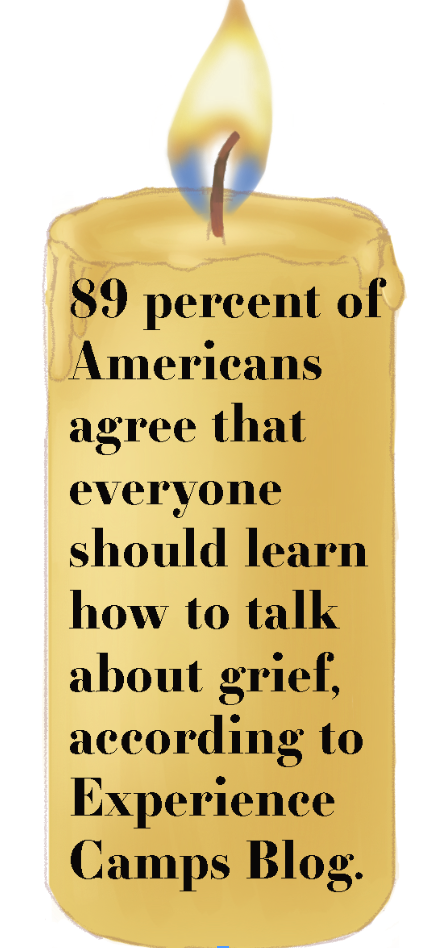
This is also not a unique experince as fifty five percent of South students have experienced loss while in high school, according to an unscientific study conducted by The Oracle of 315 students. That means that over half of us are walking around carrying pieces of glitter.
In the fall of 2023, I lost my grandfather to cancer. He was diagnosed with Stage 4 Bile Duct Cancer at the beginning of the school year and passed away by Halloween. I still can recall the tubes and the smell of antiseptic coming from our guest room, checking my phone during class, half-expecting bad news. I remember coming back to school after he died and feeling like the world had moved on without pausing at all.
There was not some clean moment where my grief was “over.” There still is not. Sometimes it is manageable. Sometimes it catches me off guard.
Grief is uncomfortable. It slows people down. It makes conversations awkward. It does not fit neatly into bell schedules, grade calculations, or attendance policies. But if more than half of us are experiencing it, then maybe the solution is not to avoid it. Maybe it is time we get used to the discomfort. Maybe instead of expecting people to sweep up their glitter as quickly as possible, we learn how to sit in the mess with them.
Grief is uncomfortable. Let’s get used to the discomfort.