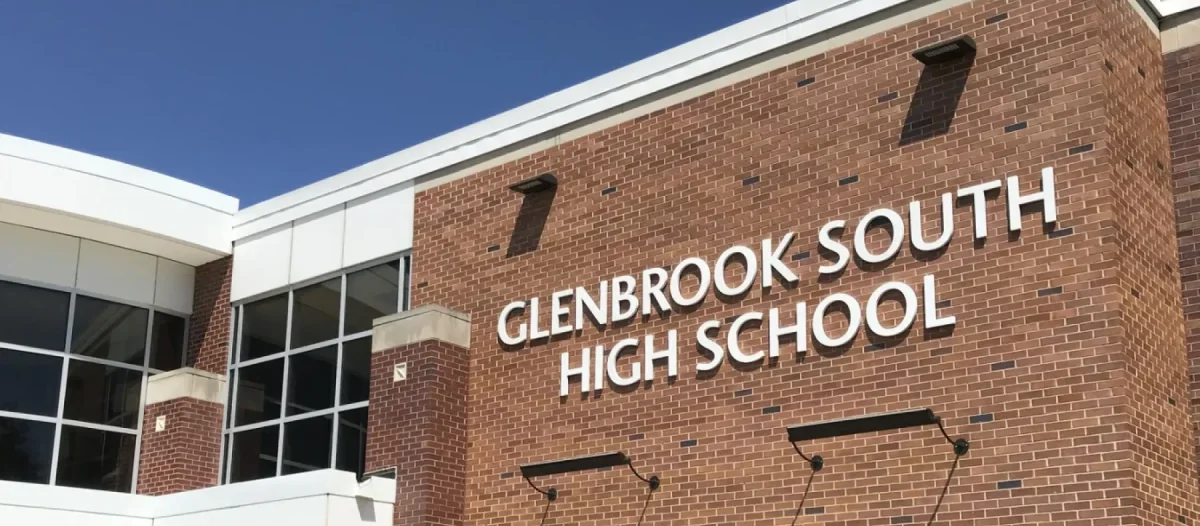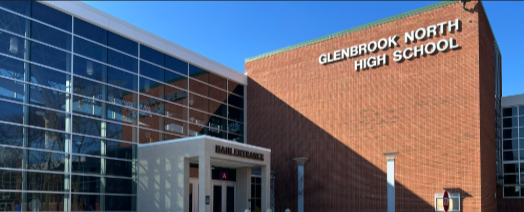

South is a ‘grade A’ school– with a 96 percent graduation rate and academic progress significantly higher than Illinois state averages, according to the 2025 Illinois Report Card. But there is one outlier statistic: a 19 percent rate of chronic absenteeism, meaning about 1 in every 5 students is chronically absent.
Chronic absenteeism is defined as a student that misses 10 percent or more of school days, for any reason, excused or unexcused, according to the U.S. Department of Education. Although South is below the Illinois average for chronically absent high school students, when compared to schools such as North and New Trier, who have 13 percent and 5 percent respectively, South is much higher.
It is hard to say exactly what makes South susceptible to this issue, since there is no common variable when it comes to chronic absenteeism, Illinois chronic absenteeism experts say. Each instance is unique, and although some students intentionally skip school, for most students there is a lot more to the story, Ronald Bean, Assistant Principal of Deans, said.
“Sometimes parents can’t provide transportation, the bus isn’t available, [or] it’s too far to walk,” Bean said. “Some of our students have anxiety in big spaces with lots of people. And when [they] put all those things into place it’s just easier to stay home.”
Support for chronically absent students at South is part of a broader academic support network called the Multi-Tiered Support System (MTSS), which was brought to South post-Covid, although it had already been implemented at other districts in the area, such as the Main Township High School District and Deerfield High School, Larissa Hanson, South MTSS Coordinator, said.
“[MTSS is about] removing the label of being a bad student and noticing that everybody is doing their absolute best with what they have,” Hanson said. “We know that students are going to thrive when they invest in themselves and their future.”
MTSS is split into three tiers, Hanson said. Tier 1 includes resources that are already supplied to every student at South regardless of absentee status, such as going to the TLC and setting up meetings with teachers to help them after missing classes. Tier 2 is focused on students who have been absent between 5 and 10 percent of the school year. These students are placed onto a list for an attendance interventionist, a position brand new to South designed to offer one-on-one support to the chronically absent students, Brian Schmalzer, Attendance Interventionist and Math Teacher, said.
After years of struggling with low attendance in his math classes, Schmalzer wanted to be part of the solution.
“There were times last year where I’d have five kids at the start of the class, way less than 50 percent,” Schmalzer said. “And when less than half your class shows up at the start, it makes you sad that the kids don’t want to be there.”
A student reaches the third tier of MTSS when they have missed 20 percent of the school year. Tier 3 students are matched with an Alternative Learning Opportunities (ALOP) Student Advocate, who will then work with the student for a minimum of six months and has the ability to conduct home visits, Hanson said.
ALOP is a program funded by the State of Illinois and places student advocates in schools that apply, according to the Illinois State Board of Education. There are 72 student advocates in Illinois, according to Ulises Zamora, one of two student advocates at South. ALOP provided services for 46 students at South as of September. Advocates focus on building a relationship with students in their case load with the intention of finding the root of their absenteeism, Zamora said.
“Mainly it’s trying to build a rapport with kids.” Zamora said. “We try to connect with the kids, sometimes just [with] daily messages to try to motivate them throughout their day.”
Compared to the 2024 report card, the chronic absenteeism rate at South has dropped 0.2 percent, but still remains 8 percent higher than North, according to the 2025 Illinois Report Card. However, Zamora is optimistic about the ALOP program’s success in the future, Zamora said.
Ultimately, South staff wants students to come to school. High school attendance is important for students because it helps to unlock opportunities they want to pursue after high school, Schmalzer said.
“School should be a safe place where learning and ideas are shared,” Schmalzer said. “I get that for some it’s a challenge to go to and maybe a lot of work, but at the end of the day, school and education open doors for your future.”