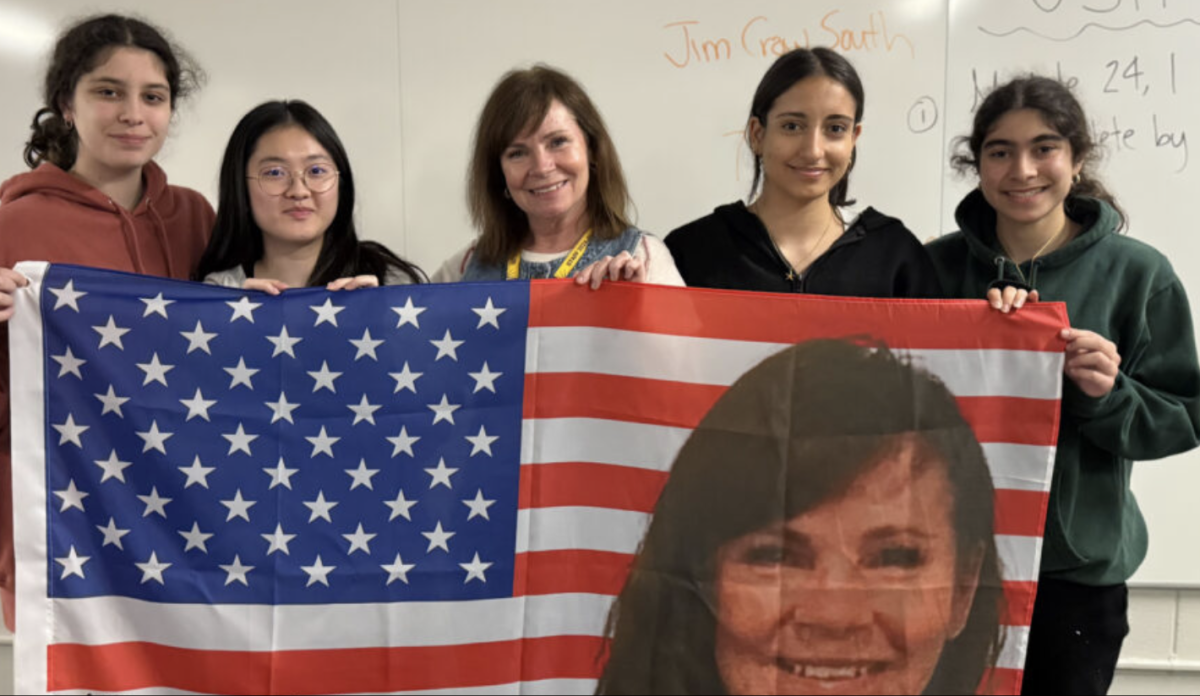
At the start of the second semester, U.S. History classrooms begin to sound a little different. Instead of the typical lectures and timelines, students trade stories, as voices of grandparents, parents, and relatives reverberate through recorded interviews. Through the Living History Project, students research and teach their classmates about their families’ connections to moments in American history, Stacy Flannery, U.S. History Teacher, said.
The project began approximately 25 years ago when U.S. History teachers searched for a way to make the curriculum feel more personal, Flannery said. At the time, students interviewed relatives about their memories of President John F. Kennedy’s assassination. The assignment later expanded, allowing students to explore any historical moment reflected in their family histories, Flannery said. Today, interviews often include stories of immigration, the Cold War, the Vietnam War, the Sept. 11 attacks, and even the COVID-19 pandemic.
The months-long project unfolds in stages, Flannery said, beginning with choosing someone to interview, researching and creating timelines, and then conducting interviews. This project allows students to not only better their understanding of U.S History, but to understand their own family history, Flannery added.
“I want students to understand that they have a story and that it’s important,” Flannery said. “The story of our country is not just the story of people in powerful positions. It’s the story of all of us. The powerful legacy of this project is that it brings people together. It encourages conversation, questions, and connection, and those are things we need more of in the world right now.”
Benjamin Widner, U.S. History Teacher, sees that connection each year as students sit down with relatives, sometimes learning family details for the very first time.
“I love the memories that are created by it,” Widner said. “I love the bonds that family members get with each other.”
Widner loves to hear about the bonding students experience with somebody in their family while working on this project. The connection between family members consists of love and tenderness that can be heard through the recorded interviews in this project, Widner said. Connections that form between family members can extend to the classroom as well, Widner added.
“I do believe that it does, more than anything, help students in the classroom feel they’re in a diverse community of people with a lot of different stories and a lot of different backgrounds to tell about,” Widner said.
Students present their completed projects in small groups where they share their stories with each other, Widner said. Senior Annie Badawi interviewed her grandfather about his immigration experience. Through that process, she developed a deeper relationship with him while also gaining a new perspective on the past, Badawi said.
“It’s a great way for students to connect with people in ways they haven’t before,” Badawi said. “I feel so much closer to my grandpa after knowing all these things about him. So, I think it’s a great way to sit down and let someone share their story.”
Hearing real experiences from real people makes learning history much more real than simply learning from a textbook, Badawi said. Gaining that deeper understanding is the ultimate goal of the project, Flannery said.
“The evolution of historical work is to teach students how to be historians and how to identify that their own history and their own story is important and worth recording, archiving, and preserving for themselves and for future generations,” Flannery said.