


Wings rustle against the sides of a crate, and seeds scatter across the floor as soft coos fill the air. Puppy pads are folded, food is poured, and the day’s first mess is already waiting to be cleaned. For those who foster animals, affection often comes hand-in-hand with obligation, Tekip said.
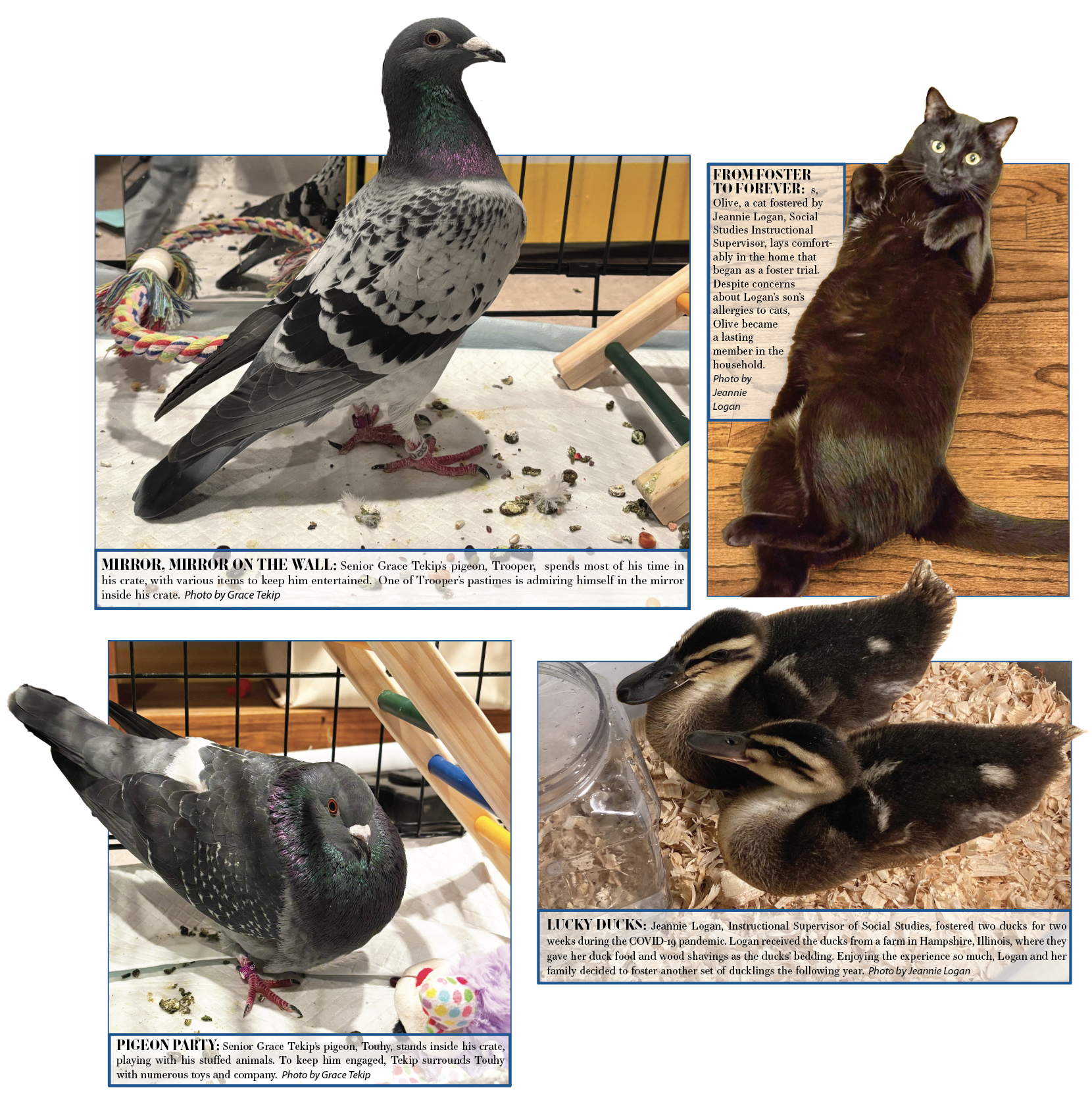
Animals in need of temporary homes rely on the people willing to take them in and act as foster parents adoption to their forever homes, senior Grace Tekip said. Even when homework piles up or schedules run late, animals must be given the time and attention they need. Tekip has built that routine into her everyday life. After finding two pigeons, named Trooper and Touhy, in need of care through the Great Lakes Pigeon Rescue, Tekip welcomed the two birds into her home, quickly learning how misunderstood pigeons can be. People see them as dirty city pests rather than animals who were once domesticated by humans and later abandoned, Tekip said. Because of that history, countless pigeons are still in need of care, she added.
“There are a lot of pigeons in need of fostering and rescuing,” Tekip said. “Seeing people act apprehensively towards them made me want to change that perception. I hope people can view pigeons more positively and know that they’re very sweet, cuddly, and loving.”
Taking care of the pigeons requires consistent, hands-on effort, Tekip said. She spends roughly an hour and a half each day feeding, cleaning, and socializing with them to ensure they stay healthy and comfortable, Tekip added.
“The pigeons live in dog crates and we use puppy pads that have to be replaced every day for easy cleanup,” Tekip said. “I have to go and turn on
the light in their room, make sure they have enough food, and clean all the poop. Pigeons need a lot of time interacting with people and they need time outside the cage.”
Local shelters rely on foster families to keep their operations running smoothly, Stacy Zeidman, Adoption Manager at Border Tails Rescue in Northbrook, said. Fostering is entirely voluntary but comes with clear expectations to ensure animals are placed in stable environments, Zeidman said. The rescue requires foster families to live within a one hour radius of the shelter, be at least 21 years of age, and complete a foster application so shelter staff can learn about their living situations and match dogs appropriately with families, Zeidman said. Families are asked to commit to a minimum two-week foster period as consistency is especially important for animals adjusting to a new environment, Zeidman added.
“We ask families to foster for a minimum of two weeks, but we always encourage people, if they’re comfortable with it, to keep them until they get adopted,” Zeidman said. “It is very stressful for dogs to go back and forth from a shelter to a home. They get comfortable in that home with their family.”
Jeannie Logan, Instructional Supervisor of Social Studies, was introduced to fostering animals through her children. Over time, Logan’s family fostered four ducklings and a cat named Olive. Logan’s daughter had long adored ducks, so, when a small farm in Hampshire, Illinois, hosted a baby animal petting zoo and offered families the chance to foster ducklings for two weeks, Logan happily agreed.
Logan’s son had been asking for a cat for years, despite his allergies, and one day he unexpectedly brought one home from a friend. The trial run quickly turned permanent, and the family decided to adopt Olive, Logan said. Caring for the animals gave Logan a clearer understanding of the effort and responsibility that fostering requires, she said.
“The ducklings especially were a good experience in recognizing that animals require a lot of care,” Logan said. “Fostering is a big responsibility, and it really opened my eyes. As much as I loved them, It was very helpful to see how much work it is. It’s not just all fun and entertainment.”
Living with and caring for the animals, even temporarily, changed the way Logan thought about why families choose to foster. She began to see fostering less as what a pet adds to a household, and more as what a household can offer a pet.
“Fostering is more about providing a safe and good life for an animal versus what purpose they provide for you,” Logan said. “That in and of itself gives fostering a sense of purpose. Especially for kids growing up having that sense of purpose knowing that they’re responsible for another living being’s safety, health, and security is a big deal. It can really give young people an incredible sense of not just responsibility but of meaning in their own lives.”
Fostering also helps clear up essential, limited space in shelters, Zeidman said. The number of dogs the shelter can save often depends on how many foster homes are available, so fostering enables shelters to rescue more animals and reduce the need for euthanasia due to overcrowding, Zeidman added.
“We want to save as many dogs as we can, but it depends on the space we have,” Zeidman said. “So when people open their homes up to take a foster in, it creates space for another dog to come to the facility. It also gives the dogs a break from the shelter into a quieter environment. We actually will learn more about the dog from our foster families in a home environment.”
Many of the dogs most in need of foster homes are those who might otherwise be overlooked, Zeidman said. Medical cases, senior dogs, and long-term residents often benefit most from the stability of a home. While fostering does not require adoption, families who grow attached are encouraged to take that next step, Zeidman said.
“We welcome fosters to adopt their foster dogs should they become attached,” Zeidman said. “We always give fosters the first option to adopt before pursuing applications.”
Even with the cleaning, the time commitment, and the occasional skepticism from others, Tekip believes fostering is invaluable. Opening your home to animals helps both animals and people better understand what living together truly requires, Tekip said.
“I think it’s really important to foster,” Tekip said. “It’s a really good way to see if an animal is a good fit for you. Even if you’re really looking to adopt permanently, it’s good to know how that animal is going to impact your family and the time commitment you will have caring for it.”