
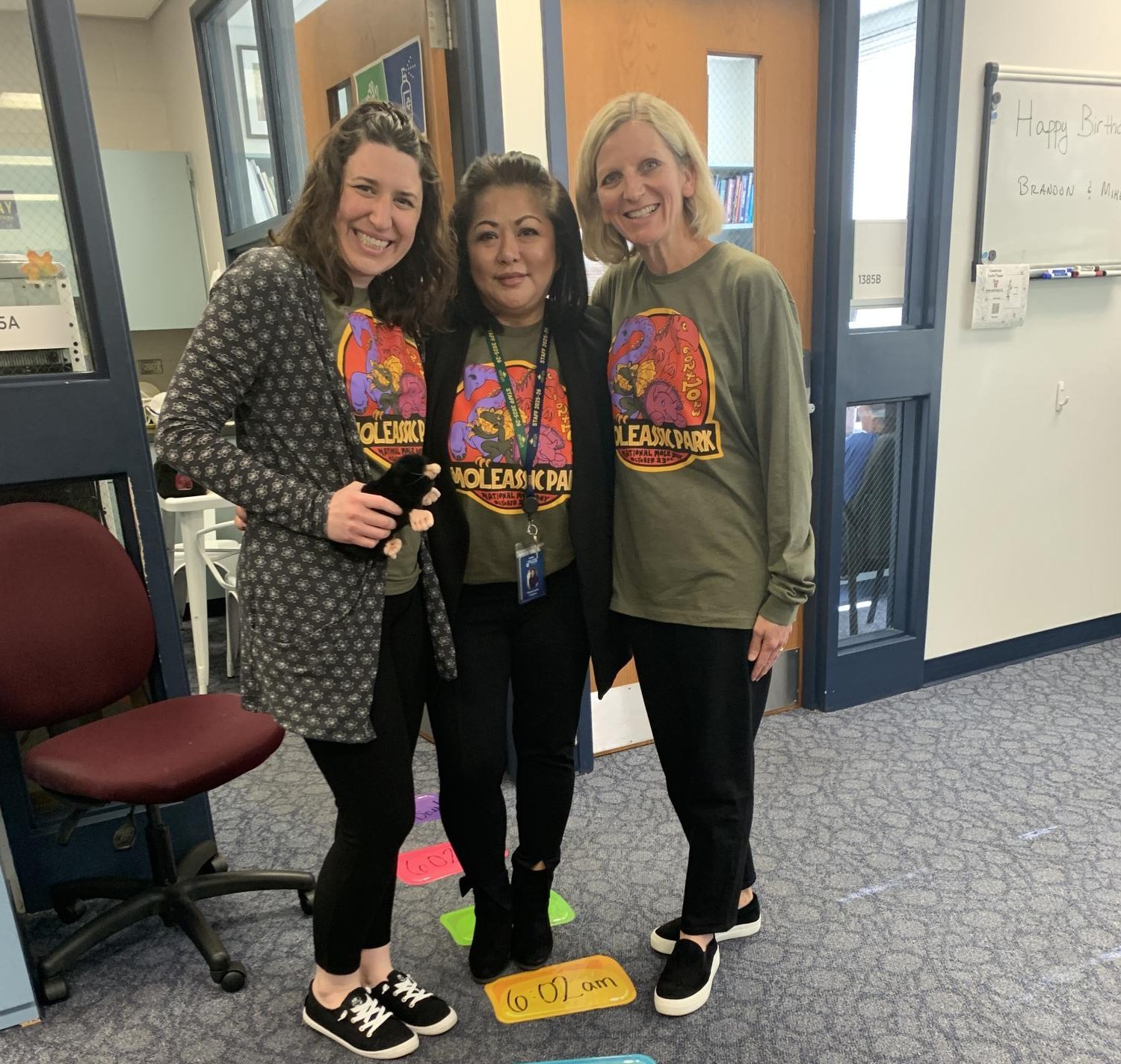
National Mole Day is widely celebrated in the science community, Jill Serling, Physics Teacher and National Mole Day Foundation President, said. The event is not a compliment to the small, burrowing mammal, but rather to the scientific mole: a unit of scientific measurement, Serling said.
From 6:02 a.m. to 6:02 p.m. on Oct. 23, scientists celebrated Avogadro’s number, also known as the mole, a measurement of 6.02×10²³ units, Serling said. As President of the National Mole Day Foundation, a national non-profit organization promoting the celebration of Mole Day, Serling works to plan fun ways for people to celebrate the day across the country, she said. The foundation selects an annual theme, with this year being “MOLEassic Park”, to accompany its Mole Day breakfast event at 6:02 am, where people can connect over moles, Serling said.
“The mission of the foundation is to promote chemistry and help teachers help students [celebrate],” Serling said.
The primary goal of the foundation is making Mole Day accessible to those who wants to celebrate, Serling said. The foundation offers grants to teachers, who use the money to attend conferences and celebrate in their classes. Additionally, it provides subscriptions that send out Mole Day stickers and temporary tattoos for students nationwide, Serling added. Some celebrations the foundation promotes include a 6.02k run, a Molympics competition, and a Mole of the Year award, Serling said.
“[The Mole of the Year award] is a small monetary award with a plaque to say that [the winner] is the most passionate, and the person was selected for [their celebration of] Mole Day that year,” Serling said.
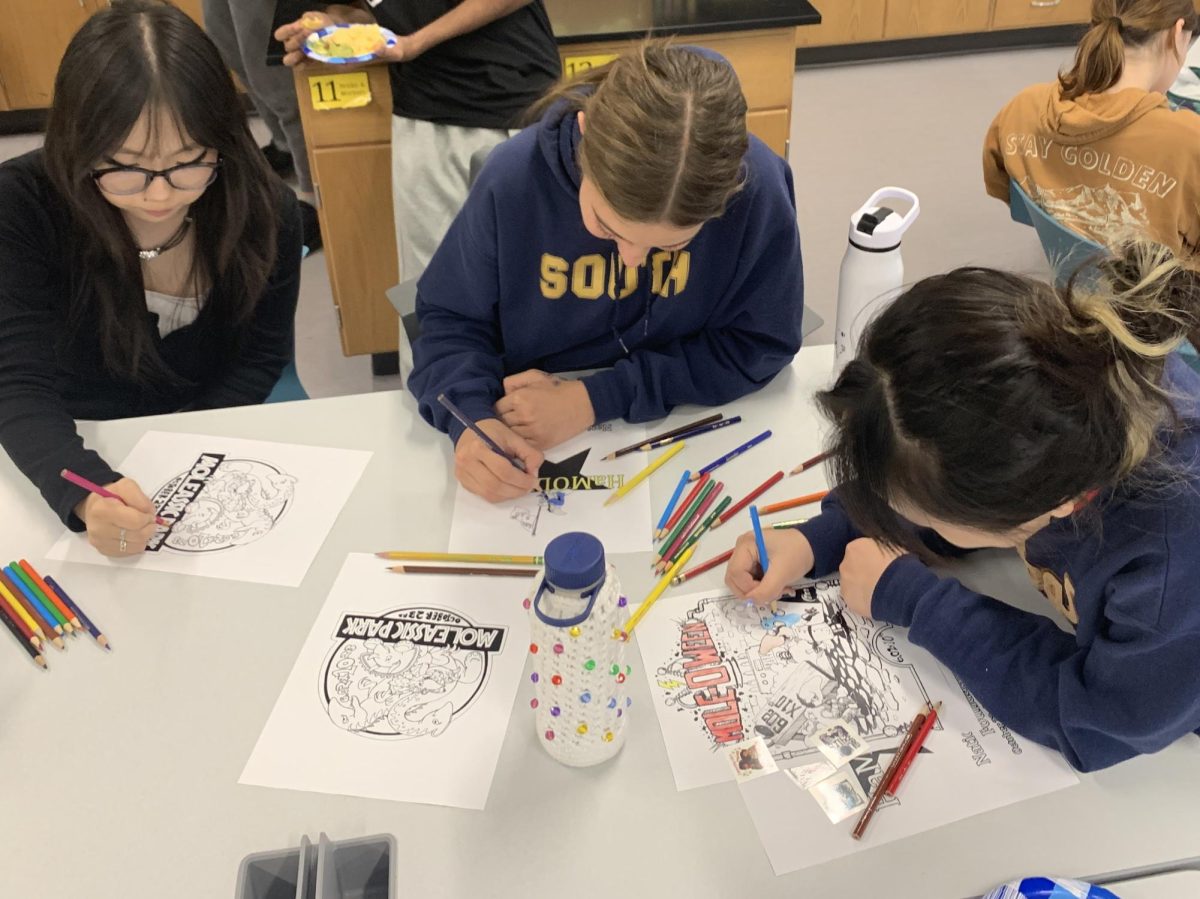
At South, Mole Day celebrations consist of coloring pages, stickers, and other activities in the science classrooms, Serling said. The most memorable part for students is the mole costume worn by Chemistry Teacher Despina Mandarino in her classes every year, Serling added. Mole day celebrations make chemistry come alive for students, Mandarino said. The combination of science, school spirit, and humor created by Mole Day builds community and a shared enthusiasm for learning, Mandarino explained.
“By connecting science to a fun event, it reminds everyone that chemistry isn’t just formulas and equations, but a creative, fun class that impacts everyday life,” Mandarino said. “[Students] walk away with the idea that curiosity and fun can coexist with academic rigor.”
Mandarino’s mole costume was sophomore Noor Dewan’s favorite part of the celebrations, she said. Mole Day landed the mole unit in chemistry class and went along with the curriculum, Dewan said.
“[Mole Day] was fun because it was related to class work, but [Mandarino] made it a fun way of learning,” Dewan said.
The National Mole Day Foundation has a website where students can submit ideas for themes each year, look at the mole store, and join the Mole Day membership, Serling said. The foundation hopes that by getting the word out, teachers nationwide will celebrate Mole Day with their students, she added.
“The goal would be that the celebrations can always be accessible to every classroom, so anybody who wants to celebrate Mole Day can,” Serling said.”